Are Telephoto Lenses Suitable For Shooting The Starry Sky? What Are Their Limitations?
Telephoto lenses, as the name suggests, have a long focal length and therefore a narrow field of view, making them suitable for photographing distant subjects. For astrophotography, telephoto lenses are generally not ideal for capturing the night sky, especially for wide-angle shots of large areas of the sky.
1.Limitations of using telephoto lenses to photograph the night sky
Astrophotography typically uses wide-angle lenses; in comparison, telephoto lenses have more significant limitations when photographing the night sky:
(1)The narrow field of view makes it difficult to capture the entire night sky
Telephoto lenses have a narrow field of view, generally less than 30°, and cannot capture the entire Milky Way or a vast expanse of the night sky. The night sky (such as the Milky Way) occupies a large area (with a horizontal span of over 100°).
When using a telephoto lens, you can only capture a portion of the night sky (such as a small cluster of stars or a single bright star), making it difficult to show the complete form of the Milky Way or large-scale star trails.
(2)Limited exposure time can easily result in star-like trailing
Due to their longer focal length, telephoto lenses result in very short exposure times. Without longer exposure times to capture enough light, stars will appear as blurred streaks due to the Earth’s rotation, affecting image quality. Therefore, when using telephoto lenses to photograph the night sky, equipment such as equatorial mounts are usually needed to minimize the effects of star movement.
(3)The aperture is too limited, resulting in insufficient light intake
Telephoto lenses typically have smaller apertures, while astrophotography generally requires large apertures (such as f/2.8 or f/1.4) to increase light gathering and shorten exposure time. The small aperture of telephoto lenses results in a darker image, requiring a higher ISO sensitivity, which in turn increases image noise and affects image quality.
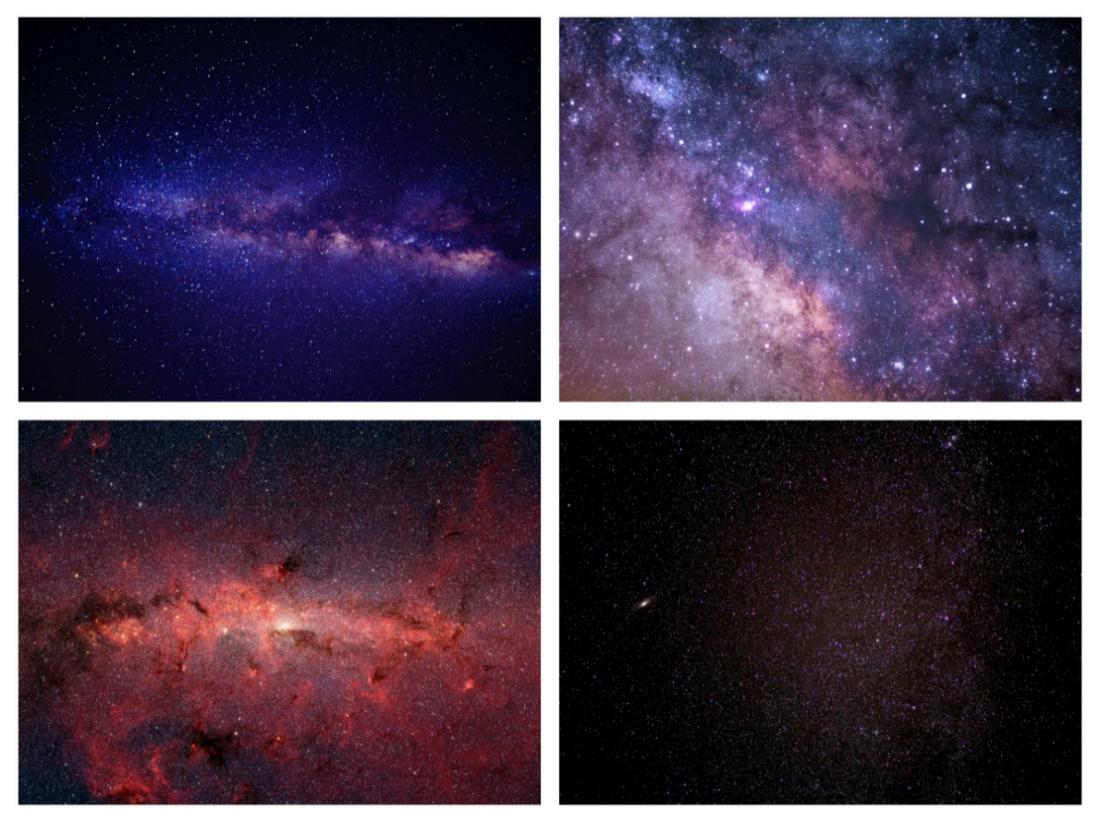
The limitations of using telephoto lenses for photographing the night sky are quite evident
(4)Composition and focusing are more challenging
Astrophotography requires precise focusing to infinity (∞), but telephoto lenses have a narrow field of view and very shallow depth of field. Manual focusing and composition can easily result in blurry stars due to slight errors. This requires relying on live view magnification to manually focus on a bright star, making the process more cumbersome. In contrast, wide-angle lenses have a larger depth of field, offering greater tolerance for focusing errors.
(5)The requirements for equipment stability are extremely high
Even with an equatorial mount, the high magnification of a telephoto lens amplifies the effects of camera shake. A stable tripod and sturdy tripod head are essential, and you may also need to use mirror lock-up and a remote shutter release/cable release to minimize camera vibration.
Furthermore, shooting the night sky with a telephoto lens may require a more complex post-processing workflow to handle issues such as star color and sharpness.
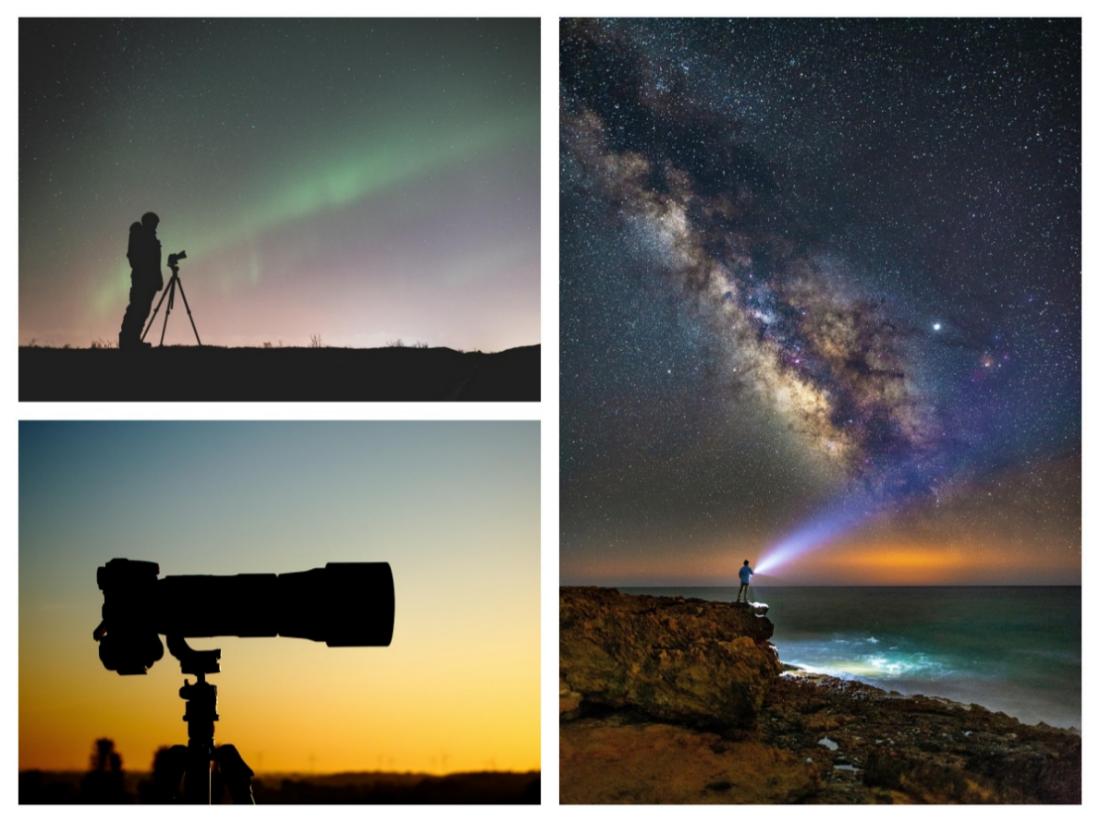
Telephoto lenses require extremely high levels of equipment stability
2.The applicability of telephoto lenses for shooting the night sky
Although telephoto lenses are not suitable for photographing wide areas of the night sky, they do have some applicability in certain types of astrophotography.
(1)Capturing detailed images of specific areas of the night sky
Telephoto lenses can magnify specific areas of the night sky, highlighting distant deep-sky objects (such as nebulae, star clusters, and galaxies) or portions of the Milky Way, making them prominent in the frame and revealing stunning details and a sense of scale.
For example, they can be used to photograph craters on the moon’s surface, Jupiter’s moons, or the details of iconic constellations like Orion, resulting in more impactful images.
(2)Compressing the relationship between the starry sky and the landscape
By utilizing the “spatial compression” effect of telephoto lenses, distant landscapes (such as mountain peaks or lighthouses) can be closely combined with the starry sky, avoiding the problem of the landscape appearing too small in wide-angle shots, and creating unique compositions (for example, making the mountain peaks appear to “support” a portion of the Milky Way). This compression of space makes the stars appear denser in the frame, creating a stunning visual effect.
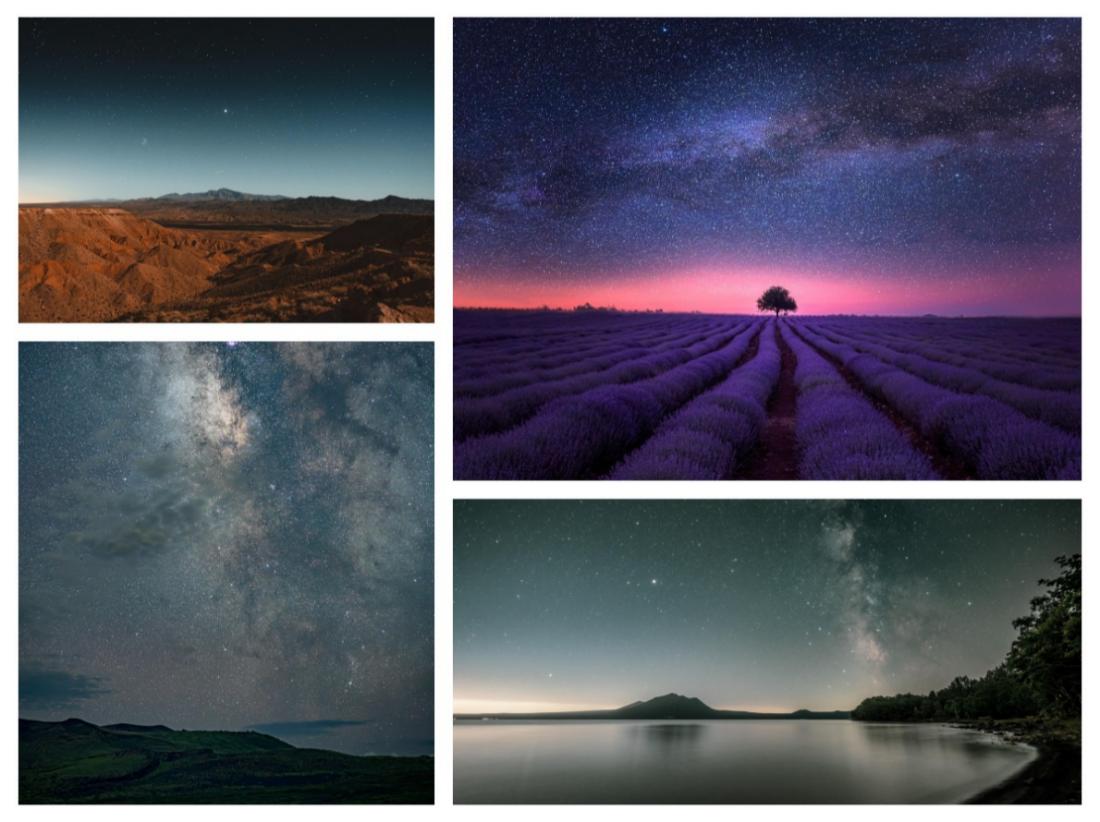
Telephoto lenses can compress the relationship between the starry sky and the landscape
(3)Photographing a portion of star trails
Telephoto lenses are used in star trail photography to focus on a specific section of the star trail circles around Polaris, resulting in denser and more layered arcs, avoiding the “sparse” appearance of wide-angle star trail photos.
In summary, telephoto lenses are not the best choice for astrophotography and have significant limitations in this field; therefore, caution is advised when choosing them. For astrophotography, telephoto lenses are more suitable for capturing specific types of celestial objects, such as deep-sky objects and localized areas of the night sky.
Final Thoughts:
By working with professionals at ChuangAn, both design and manufacturing are handled by highly skilled engineers. As part of the purchasing process, a company representative can explain in more detail specific information about the type of lens you wish to purchase. ChuangAn’s series of lens products are used in a wide range of applications, from surveillance, scanning, drones, cars to smart homes, etc. ChuangAn has various types of finished lenses, which can also be modified or customized according to your needs. Contact us as soon as possible.